

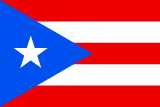
Play as · WW3 2026 · L1 · US unincorporated territory · Commonwealth government
Puerto Rico - 2026
Puerto Rico begins September 2026 under Governor Jenniffer González-Colón as a US unincorporated territory with a locally elected constitutional government commonly called the Commonwealth. Residents are US citizens, serve in the armed forces and participate in federal programmes, but cannot vote for president while resident on the island and elect only a nonvoting resident commissioner to Congress. The 2024 plebiscite expressed voter preferences among nonterritorial options, yet it did not itself alter sovereignty; Congress retains authority over a final status settlement. Fiscal power is also divided. The board created under PROMESA continues to certify budgets and fiscal plans as the government works through debt restructuring and recovery. These constitutional limits sit beside urgent material ones: an unreliable electrical system, high energy costs, migration, housing pressure and reconstruction after Hurricanes Maria and Fiona. The player's first task is to govern effectively within overlapping jurisdictions while building enough public trust to argue credibly for whatever long-term status Puerto Ricans choose.
Starting position
Electricity is the campaign's operational centre. Hospitals, water pumps, manufacturers, schools and households all pay for outages, while fragile transmission and generation can fail during the storms that make them most necessary. Federal reconstruction funds offer an opportunity to harden the grid, but procurement disputes and slow execution can consume years. Prioritize critical circuits, transparent project milestones and distributed solar-plus-storage for shelters, clinics and remote communities. Large generation contracts still need a path toward affordable maintenance and cleaner supply; microgrids cannot carry the whole island alone. Fiscal choices must pass both elected institutions and PROMESA review, so present each programme with operating costs, workforce needs and measurable reliability gains. Puerto Rico's pharmaceutical and medical-device manufacturing base depends on steady power and shipping, while tourism and small firms need faster local restoration. A credible sequence protects essential services first, fixes transmission bottlenecks second and retires temporary emergency arrangements only when permanent capacity works.
What turns the campaign
Status politics can clarify priorities or paralyse them. Statehood advocates emphasize equal federal representation and programme treatment; independence and free-association advocates emphasize sovereign choice; defenders of the current arrangement stress continuity while seeking reforms. The player should not convert a nonbinding vote into an invented congressional decision. Instead, establish a locally legitimate process that states the transition terms each option requires: citizenship questions, debt, federal benefits, defence, trade and the authority of Puerto Rico's constitution. A transparent mandate strengthens negotiations in Washington even when Congress delays. Meanwhile, the island must use powers it already has. Universities and vocational programmes can train lineworkers, engineers and health staff; municipalities can plan resilient land use; the diaspora can support investment if permits and title records are dependable. The Puerto Rico National Guard provides logistics and disaster capacity, but civilian agencies need their own command systems so every emergency does not default to military organization. Caribbean partnerships on medical supply, ports and storm response reduce isolation without prejudging political status.
Signature challenge
Build capacity before the status decision
Puerto Rico wins by making democratic preference and administrative competence reinforce each other. Publish a single reconstruction dashboard that follows federal awards from obligation through construction and service delivery. Give municipalities technical support to complete designs and audits rather than penalizing them for thin staff. Link grid investment to industrial policy: dependable energy can retain manufacturers, support laboratories and make local food storage less vulnerable. Housing reconstruction should protect renters as well as owners and avoid rebuilding repeatedly flooded sites without mitigation. These practical gains do not settle the constitutional question, but they change the terms on which it is debated. A government that can document costs, uphold contracts and deliver services has more bargaining power with Congress, investors and any future treaty partner. The end state may be statehood, independence, free association or a continued territorial arrangement only if the lawful process produces it; the scenario must not choose in advance. The strategic objective is narrower and demanding: ensure Puerto Ricans can make that choice from a functioning island, with reliable institutions and clear evidence about the obligations attached to each path.
Try the Puerto Rico campaign
Repair the island’s systems and turn Puerto Rico’s status preference into a credible mandate.
Play Free Demo as Puerto RicoRegional: USA · Dominican Republic · Cuba
Puerto Rico across the eras
Puerto Rico (WW1) · Puerto Rico (WW2) · Puerto Rico (Cold War)