

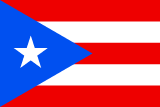
Play as · WW2 1939 · L1 · US Territory · Caribbean Strategic
Puerto Rico - 1939
Puerto Rico in 1939 is the United States unincorporated territory - under US administration since the 1898 Spanish-American War transferred sovereignty from Spain, with the post-1917 Jones Act having extended US citizenship to Puerto Ricans and the post-1900 Foraker Act and broader territorial-administrative framework having institutionalized the political-institutional architecture. Population about 1.9M. Governed by Governor Rexford Tugwell (in office from 1941; the late-1930s governors were William Daniel Leahy and others). The strategic identity is the US unincorporated territory in the Caribbean with the substantial post-1939 wartime expansion that will produce the major Roosevelt Roads Naval Station development at Ceiba (the principal US Caribbean naval-strategic asset for the wartime period and through the post-2004 closure), the substantial Ramey Air Force Base at Aguadilla (the principal US Caribbean strategic-bomber base for the early Cold War period), the substantial wartime industrial-and-military mobilization that will produce the post-1940s economic-development transformation, and the broader Caribbean strategic-positioning that the wartime period will substantially elevate.
Starting position
Puerto Rico's defense-architecture in 1939 includes the substantial US military presence (the post-1898 institutional-legacy that has continued, with the post-1939 expansion progressively scaling), the Puerto Rico National Guard (the substantial territorial-defense formation that the Jones Act framework had enabled), the substantial post-1898 Naval Station Roosevelt Roads-precursor facilities at Ensenada Honda, and the broader US-imperial-strategic architecture in the Caribbean. The substantial wartime expansion will progressively institutionalize the major Roosevelt Roads, Ramey, and broader military-industrial-development across 1940-1945. The post-1940 economic-development trajectory under Governor Tugwell and the broader Operation Bootstrap framework that will be institutionalized in the post-WW2 period will substantially restructure the agricultural-economy historical foundation.
What turns the campaign
What Puerto Rico in 1939 wants is the US territorial-administrative framework preserved at the level the post-1898-and-1917 architecture has institutionalized, the substantial wartime strategic-investment (the Roosevelt Roads Naval Station construction, the Ramey Air Force Base development, the broader military-industrial expansion) delivered at the scale the looming wartime period requires, the political-status conversation (statehood, status-quo, eventual independence) advanced through whatever federal-political process the wartime period will permit, and the substantial Puerto Rican wartime-military-and-civilian contribution to the US-Allied war effort institutionalized through the bilateral-political relationship. What Puerto Rico fears is a federal-political shift that compresses the territorial-engagement, an Atlantic strategic-environment crisis (the Battle of the Atlantic context will substantially elevate the Caribbean strategic-relevance), and a domestic political-economic crisis that the substantial 1930s post-Depression-and-New-Deal restructuring has been continuously addressing.
Signature challenge
The US Caribbean strategic territory
Puerto Rico's central strategic problem in 1939 is sustaining the US territorial-administrative framework and the substantial post-1898-and-1917 institutional architecture through the looming wartime period that will substantially elevate the Caribbean strategic-significance and produce the major military-industrial-development that will substantially restructure the territorial-economic foundation. The post-1898 institutional framework has been the principal political-administrative architecture; the looming wartime expansion will produce the substantial Roosevelt Roads and Ramey strategic-infrastructure; the broader Caribbean strategic-positioning will be substantially elevated. NationFall surfaces this as the Puerto Rican campaign's defining tension: the US Caribbean strategic-territory whose strategic-positioning will be substantially elevated by the looming wartime period, played out in a political-institutional environment where the territorial-political-status question has been continuously deferred at the federal-political level.
Try the Puerto Rico campaign
Free demo. Pick WW2 1939. Pick Puerto Rico. The US Caribbean strategic territory.
Play Free Demo as Puerto RicoRegional: USA