

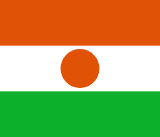
Play as · WW3 2026 · L1 · Five-year refoundation · AES
Niger - 2026
Niger enters September 2026 under General Abdourahamane Tiani, who led the 26 July 2023 coup against President Mohamed Bazoum. The institutional timetable is now explicit. On 26 March 2025, the authorities adopted a Refoundation Charter and invested Tiani as president for a five-year term that the official framework describes as renewable. This is not an imminent election transition, and the suspension of ordinary party politics makes delivery carry much of the regime's claim to legitimacy. Niger left ECOWAS with Mali and Burkina Faso effective 29 January 2025 and now works through the Confederation of Sahel States. Western military deployments have ended, including the American withdrawal from Air Base 201, while new security partnerships and the AES unified force are intended to replace lost intelligence and operational support. The change enlarges Niamey's freedom to choose partners but also makes the government directly responsible when surveillance, transport or maintenance gaps appear. Your campaign begins with sovereignty asserted and the practical costs of exercising it still unresolved.
Starting position
Security threats are separated by enormous distances. Islamic State Sahel and JNIM attack in Tillabéri and near the western borders; Boko Haram and Islamic State West Africa affect Diffa and the Lake Chad basin; northern routes connect Libya and Algeria through sparsely governed territory. A force concentrated around Niamey cannot cover all fronts. Invest in communications, protected mobility and local reporting, then measure operations by safe markets and travel rather than strike counts. Past cooperation supplied aerial intelligence that cannot be recreated instantly. AES partners can pool information and cross-border action, but they face simultaneous wars of their own. Economically, uranium policy has moved from dispute to state takeover. Orano says it lost operational control of its Niger holdings in December 2024 and that Niger nationalized SOMAÏR on 19 June 2025; Orano contests the expropriation and continues arbitration. This means legal ownership claims, actual operating control, stockpiles and export logistics must be treated separately. Revenue does not appear merely because a flag changes over a mine. Oil exports through the pipeline to Benin add another major income source and another relationship that political tension can interrupt.
What turns the campaign
The first turns test whether refoundation builds institutions or only extends command. Publish the charter's implementation rules, budgets and mining accounts, and allow professional associations and communities to report failures. A five-year term creates planning time for irrigation, schools and power, but renewability without competitive safeguards can make the endpoint meaningless. In the west, recruit intelligence through civilian protection and accountable policing; arming local groups without firm command can spread conflict between communities. In Diffa, coordinate with Nigeria and Lake Chad partners despite the new regional alignments because armed groups do not respect bloc boundaries. Uranium requires technical continuity, worker safety, marketing and a settlement of competing claims. Keep SOMAÏR operating only at a pace that protects equipment and workers, audit the stock and negotiate export routes. Imouraren's withdrawn permit and undeveloped deposit should not be counted as immediate production. For oil, preserve the Benin corridor through practical diplomacy and transparent transit terms. Farmers and pastoralists need water points, grazing routes and grain markets; closing mobility in the name of security can destroy the livelihoods most able to survive drought.
Signature challenge
Owning the resource is only the opening move
Niger's defining challenge is converting political and mineral control into services across a vast, young and climate-exposed country. Uranium nationalization may retain more value for the state, but arbitration, sales restrictions and weak logistics can leave ore and cash stranded. Publish production, costs and buyers, place proceeds through the budget and reserve funds for mine safety and eventual remediation. Treat oil income with the same discipline rather than borrowing against optimistic flows. Security must remain connected to civilian administration. A patrol that clears a route has achieved little if teachers, health workers and traders cannot use it afterward. AES coordination should fill specific gaps in intelligence and border operations, while Niger maintains working relations with Nigeria, Benin and other ECOWAS neighbours on electricity, food and transit. Replace foreign-base dependence gradually through trained maintenance, air safety and communications, not headline equipment purchases. The Refoundation Charter gives Tiani a long mandate; its strategic value depends on whether rules, accounts and local government grow stronger during that time. A successful campaign leaves wells and pastoral corridors open, mining workers paid, oil moving under enforceable terms, and districts able to resolve disputes without waiting for Niamey. Sovereignty becomes credible when ordinary people can predict what the state will do with it.
Try the Niger campaign
Turn resource control and a five-year mandate into accountable capacity.
Play Free Demo as NigerRegional: Mali · Burkina Faso · Nigeria
Niger across the eras