
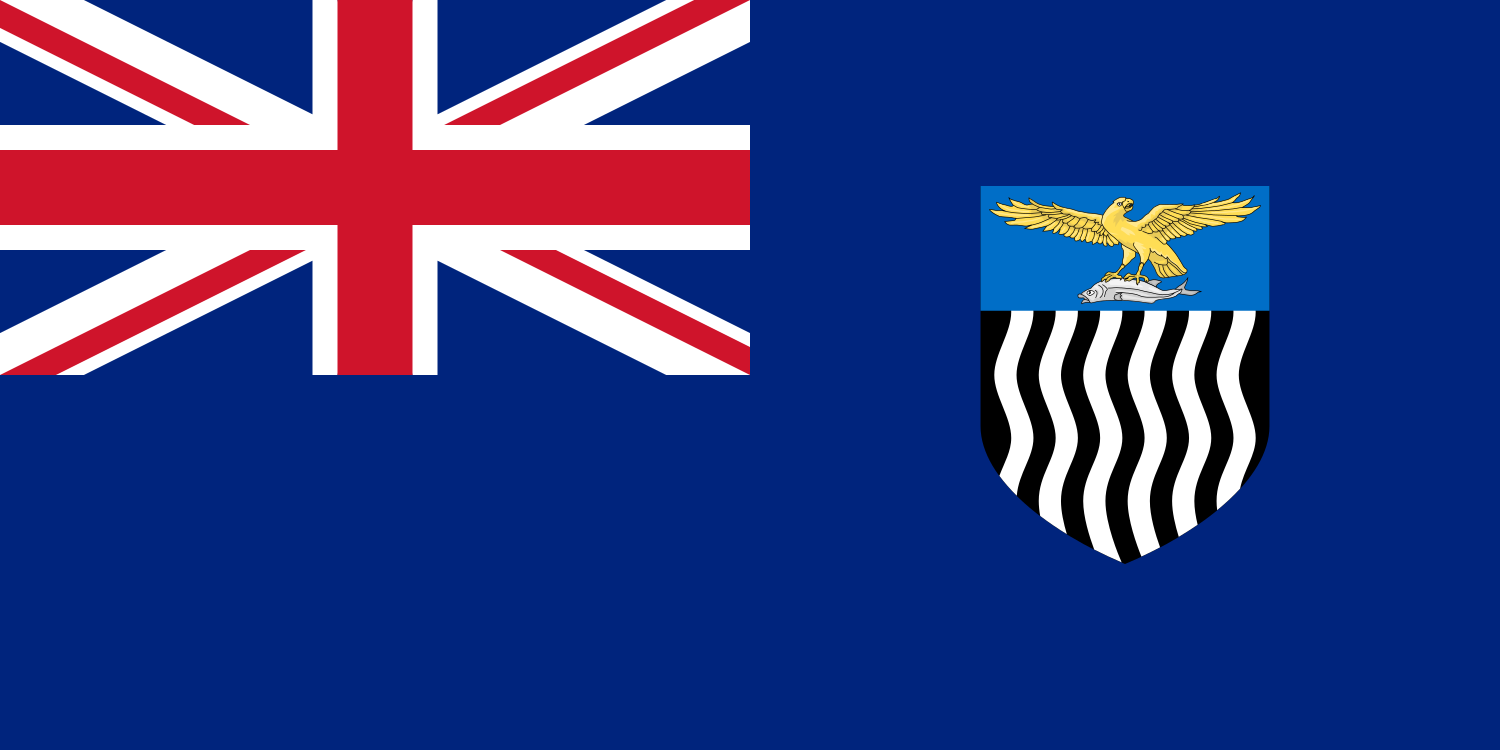
Play as · WW2 1939 · L1 · British Protectorate
Northern Rhodesia - September 1, 1939
Northern Rhodesia in 1939 is a protectorate that exists, in London's eyes, mainly for what lies under it. The Copperbelt - a run of enormous mines around Nkana, Nchanga, Roan Antelope, Mufulira and Broken Hill - has in barely a decade turned a remote Central African backwater into one of the mineral engines of the empire, its copper flowing out along the railway to the coast and its dividends flowing to shareholders in Britain and South Africa. The protectorate is administered by the Colonial Office through indirect rule over dozens of African societies, but the reality that shapes everything is the mine: a modern industrial enclave of shafts, smelters and company towns dropped into a vast rural territory. A few thousand white settlers and mine officials hold the wages, the franchise and the skilled jobs; hundreds of thousands of African miners and migrant labourers do the digging, housed in compounds and paid a fraction of the European rate. The strategic identity is the extractive protectorate: a country whose importance is measured in tons of copper and whose politics is the politics of the mine.
Starting position
The starting board is a mineral colony whose value is industrial and whose stability is the stability of its labour system. There is no colonial army to speak of - order rests on the police, the district administration and, behind them, the settler and imperial forces of the wider region; the Northern Rhodesia Regiment provides the territory's fighting contribution. The economy is copper and almost nothing else that matters to the outside world: the Copperbelt mines, the railway line that carries their output south and west to the sea, and the migrant labour system that draws men from across the protectorate and beyond to work them. That system is already visibly strained. The 1935 Copperbelt strikes, put down with fatal force, revealed an African workforce that was organising, and a colour bar that reserved advancement for whites and produced exactly the grievances a war economy will sharpen. Society is a stark pyramid: a small settler and managerial class, an emerging African mineworking proletariat with the beginnings of its own leadership, and a rural majority feeding labour into the mines. The pieces are the copper, the railway, the migrant workforce and the tension already running through the compounds.
What turns the campaign
What Britain wants is the copper - as much of it, as cheaply and as reliably as the mines can produce - and the labour peace that keeps it flowing. What the war forces is the transformation of a colonial mining district into a strategic supplier under pressure. Copper is a war metal: shell casings, wiring, munitions, the electrical guts of a mechanised war all demand it, and Northern Rhodesian output becomes something the Allied economy genuinely needs. That demand raises production, draws more men into the mines, and tightens the very grievances the 1935 strikes exposed - a colour bar holding African wages and advancement down precisely as the value of African labour climbs. The 1940 Copperbelt strikes make the point again, with more organisation behind them. The campaign turns on whether the protectorate can be driven to maximum copper output without the labour system it depends on breaking, on whether the settler minority's demands for self-government and closer union with Southern Rhodesia are indulged or resisted, and on whether an African workforce discovering its industrial power is met with reform or repression. The copper is the point; the miners who dig it are the problem.
Signature challenge
The country that is a mine
Northern Rhodesia's defining condition in 1939 is that it is governed less as a society than as a resource. The Copperbelt is the reason the protectorate matters, and the logic of the mine - extract the metal, hold down the wage, keep the labour flowing - overrides almost everything else about how the territory is run. NationFall surfaces this as the Northern Rhodesian campaign's central tension: a player who inherits one of the empire's most valuable mineral assets and a labour system that is the source of both its wealth and its instability. The war makes the copper more valuable and the workforce more essential at the same moment, and the colour bar that structures the whole enterprise cannot survive that pressure indefinitely. The 1935 and 1940 strikes are the early tremors of the African trade unionism and nationalism that will, a generation on, carry the protectorate to independence as Zambia. The deepest fact of the position is that the thing which makes Northern Rhodesia strategically indispensable - its copper, and the African labour that produces it - is also the thing that will not stay quietly extractable.
Try the Northern Rhodesia campaign
Free demo. Pick WW2. Pick Northern Rhodesia. The Copperbelt the war needs, and the miners who dig it.
Play Free Demo as Northern RhodesiaRegional: Southern Rhodesia · Belgian Congo · Tanganyika - see the WW2 1939 scenario hub
Northern Rhodesia across the eras