
Play as · WW1 1914 · L1 · Gulf Sheikhdom
Qatar - 1914
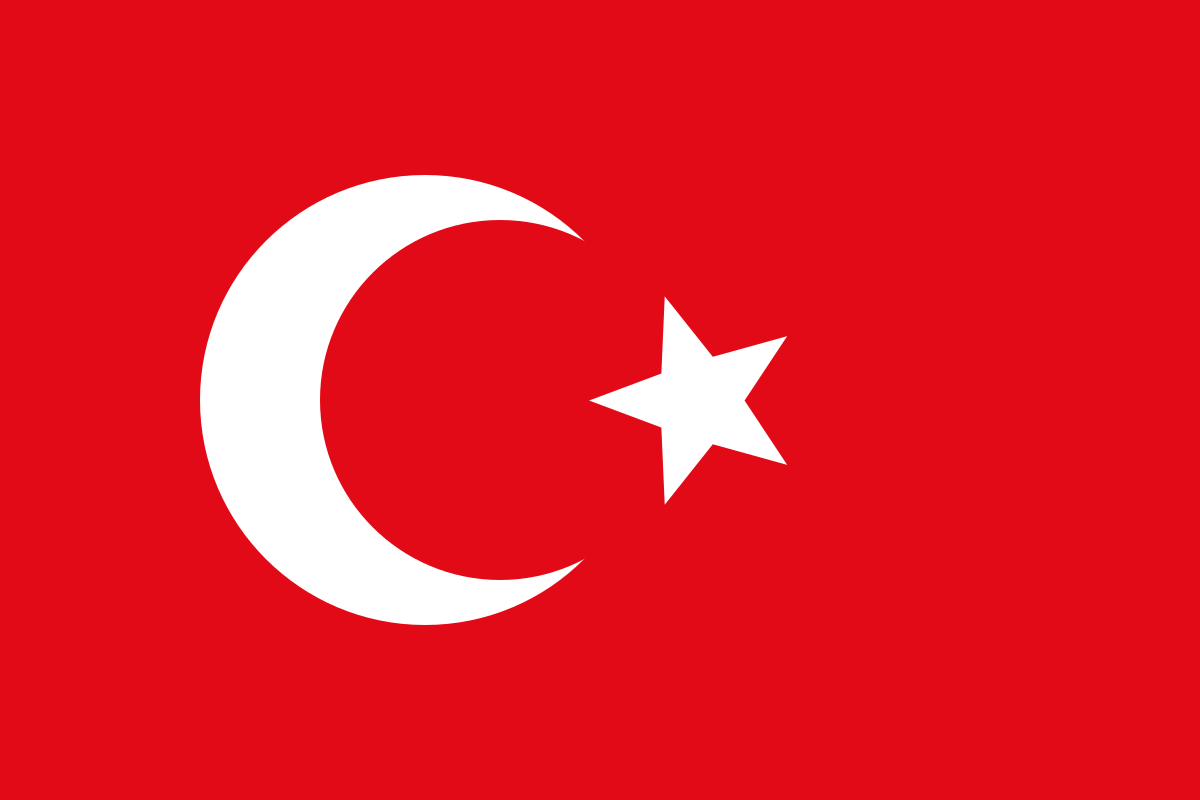
Qatar in 1914 is a small Gulf polity under Sheikh Abdullah bin Jassim Al Thani, not the sovereign gas state of a later century. Its position is unusually delicate. Britain had formal political relations with Qatar since the nineteenth century, but it continued to treat the peninsula as an area of Ottoman interest before the First World War. The Ottoman garrison’s expected withdrawal was bound up with the unratified 1913 Anglo-Ottoman convention, and a formal Anglo-Qatari treaty is still two years away, signed in 1916. The Ottoman flag used here captures that contested 1914 context rather than asserting complete Ottoman administration of every Qatari affair. Qatar’s strength is its coherent ruling family, maritime livelihood, and knowledge of Gulf connections; its weakness is scale. Doha and the coastal settlements depend on trade, pearling, and food supplies vulnerable to shifts in wider Gulf security. The strategic identity is a sheikhdom whose survival depends on reading stronger powers accurately without letting either erase its own authority.
Starting position
The opening position is coastal and personal. Doha is the political centre, but authority rests on relationships among the Al Thani, merchant families, tribal groups, pearling communities, and partners across the Gulf. Pearls supply a large share of cash income, linking Qatar to credit networks in Bahrain, India, and beyond; this makes prosperity sensitive to market conditions and seasonal risk. The interior has fewer fixed administrative points, so government depends on agreement and reputation as much as permanent institutions. Ottoman influence has been present in the late nineteenth and early twentieth centuries, while British naval dominance makes the external balance impossible to ignore. Neither fact turns Qatar into a simple possession. The ruler must maintain autonomy with limited revenue, limited force, and a population whose livelihoods cannot be separated from open sea routes. There is no petroleum wealth to finance a larger state or make foreign guarantees unnecessary.
What turns the campaign
War changes the value of the Gulf quickly. Ottoman alignment with Germany makes Britain more concerned about the political loyalties and security of ports near its route to India, while local rulers must judge whether old arrangements still protect them. Qatar cannot make the European conflict disappear, and it cannot safely assume that one sponsor’s promise is unconditional. The immediate work is to preserve food and trade, keep the coast from becoming a battlefield, maintain confidence among local groups, and prevent external rivalry from becoming a domestic fracture. The 1916 treaty will eventually formalize British protection, but it should not be read as the 1914 starting condition. At the opening, the future is genuinely uncertain: Britain is cautious, Ottoman claims have not vanished, and Sheikh Abdullah’s standing depends on proving that Qatar can remain governable through a regional crisis. This is diplomacy at small scale, where the right delay or assurance can be as important as military force.
Signature challenge
Between interests, before protection
Qatar’s signature challenge is to turn a precarious in-between position into durable political space. It is too small to determine the Gulf balance and too exposed to ignore it. The ruler’s useful resources are trust, commercial continuity, and the ability to negotiate without promising more than the country can deliver. A historically sound campaign avoids the hindsight that makes a British protectorate or a modern wealthy state seem inevitable. In 1914, Qatar’s future depends on local authority surviving the rearrangement of imperial interests. Protect the pearling economy and supplies, keep the channels of communication open, and make agreements that preserve the Al Thani’s room to govern. The prize is not a dramatic conquest; it is continuity—the ability to remain a recognizable polity when the powers around the Gulf begin to redraw their commitments. Careful treatment of merchants and divers matters here because their confidence provides both the revenue and the information a small government cannot replace. That attention turns limited resources into a political advantage when outsiders are trying to make rapid commitments on the coast. The best route is a measured diplomacy that protects local livelihoods before chasing prestige.
Try the Qatar campaign
Free demo. Pick WW1. Pick Qatar. Preserve a Gulf sheikhdom before protection is formalized.
Play Free Demo as QatarRegional: Iran · the Ottoman Empire · United Kingdom - see the WW1 1914 scenario hub
Qatar across the eras