

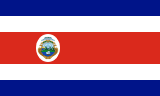
Play as · WW3 2026 · L1 · No Standing Army Since 1948
Costa Rica - 2026
Costa Rica is the only sovereign Latin American state without a standing army - the constitutional abolition in 1948 (under Article 12 of the post-civil-war constitution) has been the country's most distinctive political-strategic identity for nearly eighty years. Population about 5.2M, GDP around $140B PPP. The country has spent the post-1948 period as Latin America's most consistent constitutional democracy and has built an economy weighted toward semiconductor manufacturing (Intel's substantial presence since 1997), software and shared services (Microsoft, Amazon, IBM regional centers), tourism, and agricultural exports. The strategic identity is the unarmed-democratic Central American - Costa Rica's foreign-policy room is created by the absence of a military instrument and the diplomatic credibility that the long democratic continuity has produced.
Starting position
Costa Rica has no military forces - internal security is handled by the Public Force (Fuerza Pública), the Coast Guard handles maritime patrol and counter-narcotics interdiction, and the Border Police (Policía de Fronteras) handles the Nicaraguan and Panamanian land borders. Equipment is light. Regional-security cooperation runs through US Joint Interagency Task Force South (counter-narcotics interdiction is Costa Rica's principal security operational tempo), the OAS Inter-American Drug Abuse Control Commission (CICAD), and the bilateral cooperation that has substantially modernized the Public Force's intelligence and tactical capabilities. The Nicaraguan border has been the principal land-defense planning case since the 2010 Calero Island dispute and the subsequent ICJ ruling that confirmed Costa Rican sovereignty.
What turns the campaign
What Costa Rica wants is the unarmed-democratic constitutional identity preserved through the political pressures that the regional security crisis has periodically produced (the proposal to re-establish a small military has been periodically floated and consistently rejected), the semiconductor and software-services economic positioning preserved through the post-2024 Intel-led semiconductor reshoring opportunities that the US Inflation Reduction Act and CHIPS Act have created, the Nicaraguan border managed against any post-Ortega transition crisis or migration flow, the US security cooperation deepened at the level the narcotics-trafficking pressures justify, and the diaspora-remittance economy preserved (less load-bearing than for the Northern Triangle states, but real). What Costa Rica fears is a Nicaraguan crisis that produces refugee flows or cross-border armed-group activity at scale, a US semiconductor-reshoring strategic-shift that downgrades Costa Rica relative to closer-shore alternatives, and a domestic-political crisis that the post-2022 anti-establishment Chaves administration has produced periodic stress around.
Signature challenge
The unarmed-democratic experiment
Costa Rica's central strategic problem is sustaining the unarmed-democratic constitutional identity in a Central American region where every neighbor has progressively militarized and where the regional security pressures (narcotics trafficking, gang violence, migration flows, post-2018 Nicaraguan crisis) have intensified across the past decade. The constitutional abolition of the army was a 1948 political achievement; the practical preservation of the country's security through unarmed institutions and US security cooperation has required active diplomatic and operational work that the current generation of politicians did not personally inherit. NationFall surfaces this as the Costa Rican campaign's defining tension: a small unarmed democracy whose distinctive constitutional identity is also its principal strategic vulnerability, in a regional environment where the alternatives (re-arm, accept greater US military presence, accept reduced security capacity) all compromise something the post-1948 settlement has tried to preserve.
Try the Costa Rica campaign
Free demo. Pick WW3. Pick Costa Rica. No army since 1948. Most-stable Latin democracy.
Play Free Demo as Costa Rica