

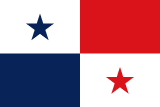
Play as · WW3 2026 · L1 · Canal State · US Pressure
Panama - 2026
Panama controls the canal that connects the Atlantic and Pacific oceans - the post-1999 fully sovereign Panama Canal Authority operates it, the post-2016 expansion (the Neopanamax locks) substantially increased capacity, and the post-Trump-administration political pressure on alleged Chinese influence over the canal-adjacent ports (operated by CK Hutchison Ports under long-running concessions) has been the central foreign-policy pressure of 2025-26. Population about 4.5M, GDP around $170B PPP. The country navigates the post-Cobre-Panamá copper-mine closure (the November 2023 Supreme Court ruling that ended one of the world's largest copper operations and removed about 5% of GDP), the continuing Darién Gap migration crisis (the principal South-North migration route through Panamanian territory), and the financial-services and ship-registry economy that the canal makes possible.
Starting position
Panama has no military forces - the army was abolished after the 1989 US invasion and the constitutional reform that followed. The Public Force (Fuerza Pública) handles internal security through the National Police (PNP), the National Air-Naval Service (SENAN - coast guard, air patrol), and the National Border Service (SENAFRONT - Darién Gap and Costa Rican border). Equipment is light. The US security cooperation is substantial - joint counter-narcotics operations, the Darién Gap migration management cooperation, the historical legacy of the 1903-1999 Canal Zone presence. The canal-adjacent port operations (Balboa on the Pacific side, Cristóbal on the Atlantic side, both operated by CK Hutchison since the 1997 concession) have been the focus of the Trump administration's allegations about Chinese influence and the threats of canal-takeover that have characterized 2025-26 bilateral pressure.
What turns the campaign
What Panama wants is the canal sovereignty preserved against the Trump-administration pressure (the political pressure has been substantial, the legal-and-treaty position is firm under the 1977 Torrijos-Carter treaties and the 1999 transfer), the CK Hutchison port-concession question managed through commercial-and-political processes that do not require Panamanian government concessions on canal sovereignty, the post-Cobre-Panamá fiscal hole filled through alternative revenue or fiscal consolidation that the Mulino government's program has sketched, the Darién Gap migration flows managed through bilateral cooperation with Colombia and the US, and the financial-services and shipping-registry sectors preserved against international tax-and-sanctions pressures. What Panama fears is a US escalation on the canal-sovereignty pressure that converts the rhetorical-political threat into operational steps, a renewed copper-mining political crisis, a Darién Gap migration spike that exceeds the existing infrastructure capacity, and a financial-services international action that targets the Panama Papers-era reputational issues.
Signature challenge
The canal under pressure
Panama's central strategic problem is that the country's primary strategic asset - the canal, the chokepoint that defines Panamanian sovereignty and economic identity - is the focus of an unprecedented US political pressure under the Trump administration's claimed concerns about Chinese influence and canal-toll structures. The legal-and-treaty position is firm; the political pressure is sustained; the strategic question is what the US administration is prepared to do operationally if the rhetorical posture continues to escalate. NationFall surfaces this as the Panamanian campaign's defining tension: a small state whose entire sovereign identity is organized around a chokepoint, played out against a larger power whose recent rhetoric has questioned the legitimacy of that sovereignty in ways the post-1999 settlement was supposed to have permanently resolved.
Try the Panama campaign
Free demo. Pick WW3. Pick Panama. The canal under pressure.
Play Free Demo as PanamaRegional: USA · Colombia · Costa Rica