

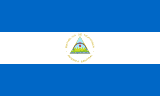
Play as · WW3 2026 · L1 · Ortega-Murillo Co-Presidency
Nicaragua - 2026
Nicaragua is governed by the Daniel Ortega-Rosario Murillo co-presidency formalized in February 2025 through a constitutional reform that converted Murillo's vice-presidential position into a co-presidential one - institutionalizing the family-political consolidation that has characterized the Sandinista government since the post-2018 protests and crackdown that fundamentally restructured Nicaraguan politics. Population about 7M, GDP around $45B PPP. The opposition has been substantially exiled (the 222 political prisoners stripped of citizenship and flown to the United States in February 2023, the subsequent waves of citizenship-stripping decrees) or imprisoned. The Russian intelligence engagement (the Chaika electronic-warfare facility, the long-running training cooperation) and the post-2021 Beijing recognition (the 2024 strategic-partnership upgrade) are the principal external relationships. The strategic identity is the Sandinista-dynasty consolidated authoritarianism that has converted the post-1990 democratic transition into something the founders of the FSLN would not recognize.
Starting position
The Nicaraguan Armed Forces are about 12,000 active personnel, oriented toward border defense, internal security, and the symbolic-political functions that the Sandinista-aligned military has retained. Equipment is overwhelmingly Russian-and-Soviet-era with selected modernization through Russian transfers - T-72B1 tanks, BMP-2 IFVs, and small-arms supply. The Russian electronic-warfare and signals-intelligence facility known as Chaika operates outside Managua under bilateral cooperation arrangements, the Russian troop rotations and training programs are quietly continuous. The Chinese diplomatic engagement has produced limited-but-visible infrastructure - the inter-oceanic canal proposal (the HKND project of the 2010s, substantially abandoned, periodically revived under different framings) remains the most-discussed if least-delivered Chinese-aligned project.
What turns the campaign
What the Ortega-Murillo government wants is the political consolidation completed and dynasticized through the institutional structures the constitutional reforms have prepared, the international-isolation pressure managed at a level the existing economic-relationships can absorb, the Russian and Chinese cooperation deepened to compensate for Western sanctions and trade restrictions, the post-2018 opposition diaspora kept off the international agenda through whatever diplomatic and security instruments the regime has, and the Sandinista-party dynastic succession (Murillo as co-president now, the children - Laureano, Camila, others - as positioned cabinet and corporate actors) institutionalized. What Nicaragua fears is a US administration policy reset that imposes fuller sanctions or asset-freezing consequences, a regional-organization (OAS, SICA) action that produces operational pressure beyond rhetorical condemnation, a domestic-political crisis (Ortega is in his late seventies, the post-Ortega transition question is finite), and any economic-collapse trajectory that the Russian and Chinese cooperation cannot offset.
Signature challenge
The Sandinista dynasty
Nicaragua's central strategic problem is the long-term sustainability of the dynastic consolidation that the Ortega-Murillo project has executed - the regime has progressively eliminated the institutional checks (independent judiciary, opposition press, civil-society organizations, opposition parties), stripped the institutional-political opposition through citizenship revocation and exile, and prepared the constitutional framework for family-succession governance, but the underlying political-economic situation requires either international engagement (which the international community has substantially withdrawn) or alternative external partnerships (Russian and Chinese, neither delivering at the scale the country requires). NationFall surfaces this as the Nicaraguan campaign's defining tension: a regime whose domestic-political consolidation is substantially complete, whose international position is substantially degraded, and whose long-term sustainability depends on managing the transition from the founder-generation to the next without producing the kind of crisis that authoritarian successions historically generate.
Try the Nicaragua campaign
Free demo. Pick WW3. Pick Nicaragua. The Sandinista dynasty consolidated.
Play Free Demo as Nicaragua