
Play as · WW1 1914 · L1 · British Colonial Theatre
Colony and Protectorate of Nigeria - 1914
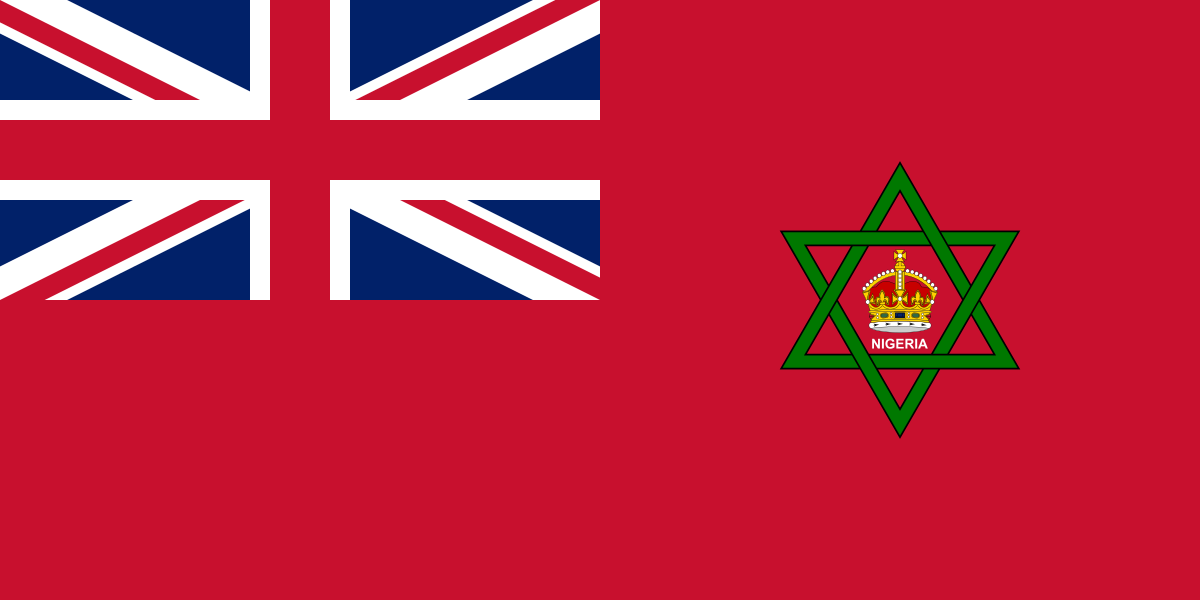
Nigeria in 1914 is a brand-new administrative union. Governor-General Frederick Lugard has amalgamated the Northern and Southern protectorates in January, joining territories with different revenues, institutions, and political systems under British rule. There is no sovereign Nigerian government choosing war. The colonial ensign identifies British authority. The immediate enemy is German Kamerun along a long eastern frontier, while the deeper challenge is making an imposed federation function under wartime pressure. Frederick Lugard has only just amalgamated Northern and Southern Nigeria in January 1914. The colony is an administrative project, not a unified political nation, and indirect rule operates differently across emirates, southern kingdoms, and commercial centers. War policy must not assume Lagos instructions carry equal legitimacy everywhere.
Starting position
Lagos customs revenue and southern export crops help finance administration, but railways do not yet form a seamless national network. The Royal West African Frontier Force supplies troops for operations in Kamerun, where dense forest, rivers, disease, and poor maps make supply harder than combat. Northern rule relies heavily on emirates and indirect administration; southern societies encounter different colonial structures. Moving soldiers, carriers, food, and intelligence across these systems tests the amalgamation more severely than any parade-ground plan. The Nigeria Regiment of the West African Frontier Force can attack neighbouring German Kamerun, but disease, rivers, forest tracks, carriers, and fragmented command constrain operations. Protect Lagos, Calabar, the Niger-Benue route, railways, telegraphs, and northern frontiers. Carrier recruitment and medical supply will decide more than nominal battalion totals.
What turns the campaign
The Kamerun campaign begins with setbacks, including failed attacks and exposed frontier posts, before Allied pressure from Nigeria, French Equatorial Africa, and the coast can converge. The player must coordinate with French and Belgian forces while protecting commerce and avoiding uncontrolled requisition. Resistance to taxation and labour demands can spread far from the front. Treat chiefs and emirs as political actors, keep carriers supplied and paid, and recognize that tropical disease may remove more strength than German fire. Palm produce, cocoa, groundnuts, tin, customs, and railway receipts support colonial finance. Requisitioning food and carriers without fair pay can turn a border campaign into widespread resistance. Coordinate with British and French columns, but demand attainable axes and supply depots rather than prestige advances through terrain neither command has mapped well.
Signature challenge
Fight an imperial border war through fragile logistics
Nigeria's signature problem is that the administrative map is ahead of political reality. Wartime command can accelerate integration by joining rail, treasury, and communications, or reveal that the merger exists mainly on paper. Winning Kamerun at the cost of food security and legitimacy would leave a brittle colony. Success uses limited forces, reliable intelligence, and negotiated logistics to close the German frontier while building institutions that serve more than extraction. The campaign is colonial and unequal, but its choices shape the future state's infrastructure and fault lines. A campaign that survives those pressures has built durable power; one that depends on a single offensive or patron remains exposed even after a battlefield success. Nigeria’s challenge is fighting an imperial war while amalgamation itself remains unfinished. A campaign can improve communications and joint administration or expose every regional imbalance. Success defeats the Kamerun threat with limited losses, pays carriers, and leaves transport useful to civilians; failure treats people as expendable logistics and makes coercion the new colony’s common institution. The Kamerun frontier presents several different wars. Lake Chad, the Benue corridor, Cross River country, and the southern forest cannot share one timetable or supply method. Columns need river craft, interpreters, survey information, quinine, porters, and depots placed for the rains; telegraph failure can leave commanders advancing on obsolete orders. Collaboration with French Equatorial Africa opens converging axes but also disputes over prisoners, customs, and eventual occupation. Lugard should define civilian oversight before distant officers improvise taxation or collective punishment. Lagos newspapers and merchant networks will carry news of casualties and requisitions far beyond the battlefield. Transparent accounts and enforceable carrier contracts therefore protect military mobility as well as colonial revenue.
Try the Colony and Protectorate of Nigeria campaign
Free demo. Pick WW1 1914. Pick Colony and Protectorate of Nigeria. Make the opening position your own.
Play Free Demo as Colony and Protectorate of NigeriaRegional: see the WW1 1914 scenario hub
Colony and Protectorate of Nigeria across the eras