
Play as · WW1 1914 · L1 · Occupied Ottoman Khedivate
Khedivate of Egypt - 1914
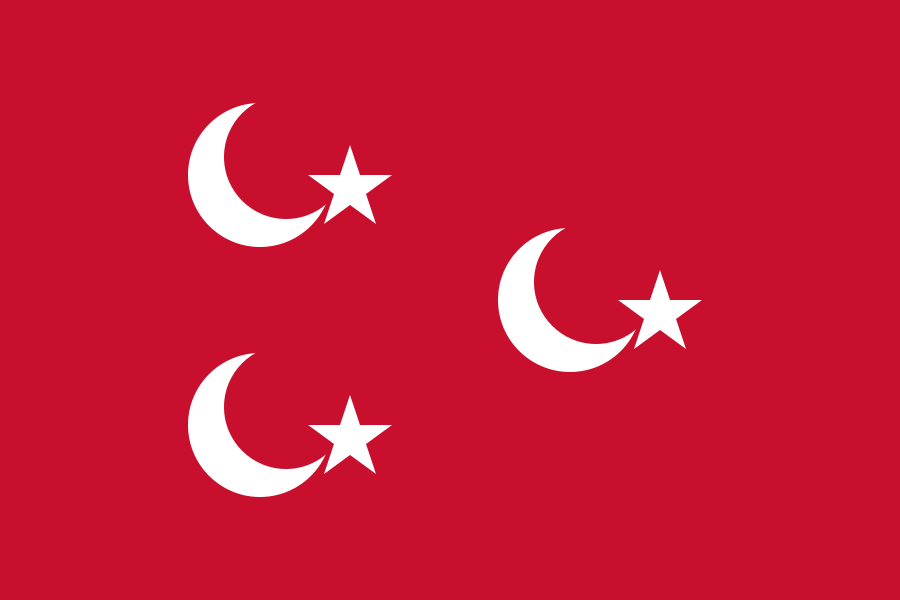
Egypt in August 1914 is formally an autonomous khedivate within the Ottoman Empire and practically under British occupation since 1882. Khedive Abbas II remains the dynasty's ruler, British advisers dominate policy, and the legal fiction has not yet been replaced by the British protectorate proclaimed in December. The Muhammad Ali dynasty flag marks that awkward reality. The Suez Canal makes Egypt essential to communications with India, Australasia, and Asian possessions before the Ottoman Empire has even entered the war. Abbas II remains khedive under nominal Ottoman sovereignty while Lord Kitchener’s British occupation controls decisive power. In August, do not pretend the December protectorate already exists. Guard the Suez Canal and Cairo while managing a legal ambiguity that affects Ottoman subjects, capitulations, Egyptian ministers, and the legitimacy of every emergency order.
Starting position
The opening position runs along the Nile valley, the Delta, Alexandria, Port Said, and the canal zone. British and Egyptian forces guard infrastructure while imperial troops from India and the dominions assemble. Cotton exports finance much of the economy, but dependence on a single crop and imported food creates wartime exposure. The Egyptian Army has been constrained since occupation, while the Sudan and Sinai approaches extend the security burden far beyond Cairo. Control of water, railways, telegraph, and shipping is more valuable than empty desert. The Egyptian Army is restricted after 1882, while British troops and the Egyptian-run Sudan shape defense. Concentrate canal patrols, railway protection, telegraph repair, and desert reconnaissance rather than promising an independent field army. Alexandria’s harbour, the Delta, Cairo junctions, and Suez water supply are the critical nodes; the western frontier also needs watching.
What turns the campaign
Ottoman entry transforms divided sovereignty into an open strategic contest. Constantinople can appeal to dynastic and religious legitimacy and threaten the canal across Sinai. Britain can depose Abbas II, install Hussein Kamel, and declare a protectorate, but those later measures should arise from play rather than be assumed in August. Nationalist opinion is fragmented, surveillance is strong, and wartime requisitions can harden resentment. Defend Suez in depth without stripping the interior or turning every political critic into an enemy. Cotton exports finance the economy but depend on shipping and irrigation. Military requisitions of animals, grain, and labour can alienate villages faster than Ottoman agents can. Set prices, compensate owners, protect canal workers, and keep food moving into cities. The corvée precedent makes compulsory labour especially politically costly and should constrain logistics policy.
Signature challenge
Hold the canal in a state of divided sovereignty
Egypt's defining task is to protect the world's most valuable passage while governing a population that did not choose Britain's war. A purely military solution may keep the canal open and still destroy legitimacy through forced labour, crop controls, and emergency rule. A purely conciliatory policy may leave railheads and depots vulnerable. Success balances an effective canal defence, resilient food and transport systems, and political choices that acknowledge Egyptian interests. The prize is leverage over empire; the danger is remaining merely its guarded corridor. A campaign that survives those pressures has built durable power; one that depends on a single offensive or patron remains exposed even after a battlefield success. Egypt’s signature decision is whether canal defense becomes another layer of occupation or the beginning of accountable Egyptian administration. Exiling Abbas II and proclaiming a protectorate may simplify British command but narrow legitimacy. Success protects Suez while retaining ministers, courts, and local cooperation; failure secures the waterway by coercion and generates a broader nationalist coalition. Suez defense requires cooperation beyond the canal bank. The Sinai approaches need camel patrols, wells, aerial observation as aircraft become available, and reliable warning from coastal stations. The Egyptian State Railways must carry troops without stopping cotton, food, and civilian passengers altogether. In Cairo and Alexandria, censorship that merely suppresses bad news will feed rumours about Ottoman victories and British intentions. Ministers should receive enough information to defend policy publicly and to challenge abusive requisition. Sudan further complicates command because the condominium joins British and Egyptian claims without resolving either. Treating Sudanese units and Egyptian officials as simple imperial auxiliaries may meet an emergency, but it stores up a sovereignty dispute for the peace.
Try the Khedivate of Egypt campaign
Free demo. Pick WW1 1914. Pick Khedivate of Egypt. Make the opening position your own.
Play Free Demo as Khedivate of EgyptRegional: see the WW1 1914 scenario hub
Khedivate of Egypt across the eras
Egypt (WW2) · Egypt (British-occupied) (Cold War) · Egypt (WW3)