

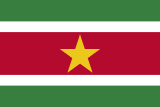
Play as · WW3 2026 · L1 · Petro-Discovery · Dutch Heritage
Suriname - 2026
Suriname is the smaller petro-discovery South American state, following Guyana's pattern with offshore oil-and-gas discoveries in the Block 58 area (operated by Apache, TotalEnergies, and Petronas) that have produced commercial quantities and are progressing through the development decisions toward a final-investment-decision configuration. Population about 620,000, GDP around $10B PPP. The country shares the Dutch language and a substantial post-colonial Dutch-Surinamese diaspora connection - about 350,000 people of Surinamese descent live in the Netherlands, the principal external-economic relationship until the post-2015 oil-and-gas-discoveries reframing of foreign policy. The strategic identity is the small Dutch-speaking Caribbean-South-American state navigating the same petro-discovery transformation Guyana is further along on, with a complicated political-historical legacy from the long Bouterse era.
Starting position
The Suriname National Army is about 1,800 active personnel, oriented toward border defense, internal security, and limited regional-cooperation deployments. Equipment is modest. The Block 58 offshore-development decision was taken in 2024 by the operating consortium for the GranMorgu field development; first oil is targeted for 2028. The Santokhi government - Vice President Ronnie Brunswijk and President Chan Santokhi, in office since 2020 - has been the post-Bouterse-era administration that has navigated the IMF program, the December Murders prosecution that resulted in a 2023 conviction of former president Bouterse (who fled before the verdict and died in late 2024 in hiding), and the early stages of the petroleum-sector development. The 2025 election cycle is the first post-Bouterse-era electoral test of the new political-institutional alignment.
What turns the campaign
What Suriname wants is the Block 58 development advanced toward first-oil on schedule, the IMF program completed without producing the kind of fiscal consolidation that disrupts the political consensus, the post-Bouterse-era political consolidation completed through the 2025 election, the Dutch-Surinamese bilateral relationship (the principal Western diplomatic-economic anchor) preserved against any post-colonial-politics disruption, and the Chinese economic engagement (cooperation in agriculture, infrastructure, and the timber sector) maintained at a level the country can absorb without producing the political-economic dependencies that the comparator small states have experienced. What Suriname fears is a Block 58 development delay or technical setback that postpones the petroleum revenue, a regional-environment disruption (Guyana-Venezuela escalation, Venezuelan migration spillover) that demands resources the small state cannot easily generate, and a domestic political-ethnic crisis that the post-Bouterse-era settlement has not been comprehensively tested against.
Signature challenge
The petro-transition
Suriname's central strategic problem is managing the same petro-discovery transformation Guyana is several years further along on, with a smaller institutional capacity, a complicated post-Bouterse-era political legacy, and the same regional environment that has converted Guyana's transformation into a target for Venezuelan territorial-claim escalation. The Block 58 development is real and will deliver substantial petroleum revenue if it reaches operational delivery on the projected timeline. NationFall surfaces this as the Surinamese campaign's defining tension: a small state with the petro-discovery transformation premise, the post-Bouterse-era political-institutional reconstruction, and the resource-curse risk that every comparator state has experienced - all three demanding institutional capacity that is the principal scarce resource the country has.
Try the Suriname campaign
Free demo. Pick WW3. Pick Suriname. Petro-discovery. Dutch heritage. Post-Bouterse reconstruction.
Play Free Demo as Suriname