

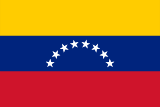
Play as · WW3 2026 · L2 Mid-Power · RCC-aligned
Venezuela - 2026
The largest proven oil reserves in the world. Through twenty years of mismanagement, sanctions, and political crisis, a country roughly a third smaller than it was a decade ago - eight million people have left. The Bolivarian Armed Forces are large on paper, mediocre in capability, and politically intertwined with the regime's survival apparatus. Russian and Chinese economic and security relationships keep the system afloat.
Starting position
Venezuela in 2026 is governed by Nicolás Maduro after the disputed July 2024 election that the opposition under Edmundo González and María Corina Machado claimed by a substantial margin and that the regime declared for Maduro without releasing the polling-station tallies that historically accompany Venezuelan electoral processes. The international response was sharp condemnation and partial recognition of the opposition victory; the Russian and Chinese response was endorsement of the official result. The regime survived the immediate post-election period through arrests, repression, and emigration.
The Essequibo region dispute with Guyana - over 60,000 square miles of jungle territory containing oil reserves discovered by ExxonMobil in 2015 - escalated through 2023-24 with a referendum, a constitutional decree of annexation that has not been operationally implemented, and continued military deployments along the disputed border. The Bolivarian Armed Forces operate Russian-supplied Su-30MK2 fighters and S-300 SAM systems alongside aging Cold War legacy equipment. Russian Tu-160 strategic bombers have visited Venezuelan airfields on rotational deployments demonstrating strategic alignment.
Strategic levers
The instruments are oil reserves (the actual production capacity has collapsed; the reserves remain), regional ideological influence (Cuba and Nicaragua remain aligned, Bolivia and Honduras have rotated through alignment, Petro's Colombia maintains diplomatic relations across the regime change), the Essequibo claim (a frozen dispute that can be reactivated whenever the regime needs nationalist mobilization), and the basing access for Russian aircraft and Chinese commercial activity that gives the WW3 great powers Caribbean-adjacent presence.
What turns the campaign
What the Maduro regime wants is consolidated control after the 2024 election crisis, sanctions relief or sustained evasion infrastructure, sustained Russian and Chinese support, partial restoration of oil production through Chinese investment and discrete relief from US enforcement, and managed succession when Maduro eventually exits - preferably to a regime-loyal successor through a process the international system grudgingly accepts.
What the regime fears is mass street protest that overwhelms the security apparatus (rehearsed periodically, never quite tipping), military or PSUV elite defection at scale, a US administration that escalates from sanctions to active regime-change pressure, an Essequibo crisis that turns kinetic and produces a Brazilian or US response, and any oil-revenue collapse that pushes the regime past the financial threshold where patronage networks fail.
Signature challenge
The frozen-collapse problem
Venezuela has been collapsing for a decade without collapsing. The regime has demonstrated remarkable durability under conditions that would have ended most governments. The strategy is "collapse just slowly enough to remain in power" - manage the bottom of the U-curve indefinitely. NationFall surfaces the dynamic as chronic internal-politics pressure that produces no decisive moment. The campaign turns on whether the slow-collapse tolerance has a limit, and what tips it when it does.
Try the Venezuela campaign
Free demo. Pick WW3. Pick Venezuela. Manage the slow collapse.
Play Free DemoRegional siblings: Cuba · Colombia · Brazil
All WW3 mid-powers · All nations
Venezuela across the eras