

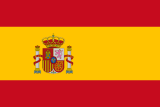
Play as · WW3 2026 · L3 Mid-Power
Spain - 2026
The western anchor of NATO. Astride the Strait of Gibraltar. Host to US naval forces at Rota and US Air Force at Morón. The Spanish Armed Forces operate F-18s, A400Ms, the LHD Juan Carlos I, and a credible submarine fleet. Indigenous defense industry - Navantia, Indra - pulls weight on NATO common projects. And a domestic political system that has spent fifteen years cycling between fragmentation and reconstruction with predictable consequences for budget continuity.
Starting position
Spain in 2026 occupies a strategic position no European NATO member can replicate: the Atlantic-Mediterranean transit at Gibraltar, naval basing depth at Rota and Cartagena, and an air-base infrastructure that survives any forward-area degradation. The four BMD-capable Aegis destroyers homeported at Rota for US Navy 6th Fleet operations are the visible expression of the strategic relationship; the less-visible expression is the routine routing of NATO maritime traffic through Spanish ports and airfields.
The 2024 NATO summit commitments accelerated Spanish defense spending toward 2% of GDP for the first time in modern history - the trajectory is real if politically fragile. F-35 procurement has been deferred in favor of Eurofighter Typhoon Tranche 5 and ongoing FCAS commitment with France and Germany. Navantia is producing F-110 frigates for the Spanish Navy and exporting frigate variants to Saudi Arabia and Australia. The Sahel and West African Atlantic-coast counter-terrorism operations have grown in importance as Spanish basing in former French Sahel zones became politically unavailable.
Strategic levers
The instruments are geographic - Gibraltar, Canary Islands, Ceuta, Melilla - combined with NATO-integrated naval and air infrastructure that lets the alliance project across the Western Mediterranean and the eastern Atlantic without depending on French facilities. The diplomatic relationships that matter most are with Morocco (where the 2022 normalization on Western Sahara reshaped the bilateral dynamic), with Latin America (Spanish-language and historical ties that translate into trade and migration leverage), and with the EU's Mediterranean Union project where Spain provides leadership Brussels does not directly hold.
What turns the campaign
What Spain wants is the western Mediterranean held without forcing pull-backs from internal commitments - Morocco managed, Algeria contained, the Atlantic approaches secured against migration crisis and counter-terrorism pressure. The political file Spain runs continuously is keeping the cross-party defense and NATO consensus from cracking under the regional autonomy pressures that recur every electoral cycle.
What Spain fears is regional fragmentation (Catalonia, the Basque country) that consumes political capital that defense and foreign policy require, a Maghreb crisis (Moroccan-Algerian war, Sahrawi escalation) that pulls forces and diplomatic bandwidth, and any forced choice between NATO and EU institutional positions where Madrid's seat at neither table is large enough to dictate. NATO loses the Western Mediterranean and the southern Atlantic approaches if Spain disengages - and Spain knows it.
Signature challenge
The internal-cohesion problem
Spanish strategic value to NATO depends on internal political stability. Catalan independence pressures, Basque autonomy questions, and the recurrent fragmentation of Spanish coalition politics are not background noise - they directly constrain defense budget continuity, force-structure planning, and the willingness of any government to commit forces forward when it depends on regional-party votes to stay in office. NationFall's internal-politics mechanics surface the gap as the chronic Spanish defense file: how to project externally when the coalition holding the budget vote is held together by promises that competing autonomy claims cannot be made.
Try the Spain campaign
Free demo. Pick WW3. Pick Spain. Hold the western flank while the home front fragments.
Play Free DemoSpain across the eras