

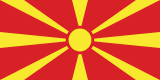
Play as · WW3 2026 · L1 · NATO · Newest Member
North Macedonia - 2026
North Macedonia is NATO's newest full member, joining in March 2020 after the 2018 Prespa Agreement with Greece resolved the twenty-seven-year name dispute that had blocked accession - the country renamed itself from "Republic of Macedonia" to "Republic of North Macedonia" in exchange for Greek consent to NATO and EU membership tracks. Population 1.8M, GDP around $45B PPP. The EU accession negotiations remain blocked by Bulgaria's demands on language, history, and minority identity questions that have proven harder to resolve than the Greek name dispute. The strategic identity is the small Western-Balkan NATO state that has done the politically expensive work of accession and is still waiting for the institutional reward.
Starting position
The Army of the Republic of North Macedonia is about 8,000 active personnel, oriented toward small-unit operations, NATO interoperability, and contributions to alliance peace-support and forward-presence operations. Equipment is mixed and lighter than most NATO militaries - the Soviet-era inventory is being progressively replaced through US Foreign Military Financing and bilateral donations (Stryker variants, Bradley IFVs being delivered, the JLTV light vehicle entering service). Defense spending has crossed 2% of GDP. The country participates in NATO's KFOR mission in Kosovo, contributes a battalion to the German-led Forward Land Forces in Lithuania (the small-state badge of operational commitment), and runs the joint Krivolak Training Area used by alliance forces.
What turns the campaign
What North Macedonia wants is the EU accession unblocking - the Bulgarian veto cleared, the constitutional amendments to recognize a Bulgarian minority drafted and adopted, the negotiating chapters opened - without giving up on the constitutional, linguistic, or identity questions that the political consensus regards as essential. The NATO operational commitments delivered to demonstrate alliance value, the Albanian-minority politics (about 25% of population, with the 2001 Ohrid Framework Agreement institutionalizing power-sharing) maintained against periodic ethnic-political tensions, and the Western Balkan regional integration advanced through the Open Balkans initiative. What North Macedonia fears is a Bulgarian political track that hardens the EU veto into an indefinite block, a Russian information-and-influence campaign that exploits Macedonian-Bulgarian-Greek ethnic-historical fault lines, and any North Atlantic political reset that downgrades the Western Balkan accession track NATO has already committed to.
Signature challenge
The accession purgatory
North Macedonia's central strategic problem is that the country paid a real political price - a constitutional name change that took a referendum, parliamentary supermajority, and a generation of political capital - for an EU accession track that has produced no movement since the 2020 NATO entry. The Bulgarian veto has converted EU candidacy into an open-ended waiting room, and the political consensus that delivered Prespa is not infinitely renewable. NationFall surfaces this as the North Macedonian campaign's defining tension: a small state that has done what the West asked and is still waiting for what was promised, with a Russian-aligned information environment that documents every delay and a domestic politics whose patience for the EU-and-NATO trajectory was finite from the start.
Try the North Macedonia campaign
Free demo. Pick WW3. Pick North Macedonia. Did the deal. Still waiting on the reward.
Play Free Demo as North Macedonia