

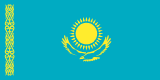
Play as · WW3 2026 · L2 Mid-Power · Multi-Vector
Kazakhstan - 2026
The largest landlocked country in the world. The world's largest uranium producer. A major oil exporter (Tengiz, Kashagan). The most explicit practitioner of multi-vector foreign policy in Central Asia. Membership in the Russian-led CSTO and the Chinese-Russian SCO is balanced by deepening cooperation with the US, EU, and Turkey.
Starting position
Kazakhstan in 2026 is governed by Kassym-Jomart Tokayev, who succeeded long-time leader Nursultan Nazarbayev in 2019 and has consolidated authority since the dramatic January 2022 unrest that the Tokayev government ended with CSTO troop deployment - Russian forces - to suppress. The "New Kazakhstan" reforms following 2022 have included constitutional amendments limiting future presidential terms, capital city renaming back to Astana from Nur-Sultan, and selective decentralization.
The 2022 Russian invasion of Ukraine produced a careful Kazakh foreign-policy adjustment. Tokayev publicly distanced from the recognition of Donetsk and Luhansk, refused to support the Russian war effort directly, accepted Russians fleeing partial mobilization, and worked to diversify oil-export routes away from sole Russian transit (the CPC pipeline) toward the Trans-Caspian alternative through Azerbaijan and Turkey. Defense procurement remains largely Russian-equipped but has selectively diversified - Turkish ANKA drones, Chinese systems, French Airbus rotorcraft.
Strategic levers
The instruments are uranium production (40%+ of global supply), oil and gas reserves at scale, the geographic position that makes Kazakhstan the central transit corridor for Belt and Road's Eurasian land bridge, the Russian diaspora population (about 15% of the country) that constrains how openly Astana can pursue distance from Moscow, and the post-2022 strategic-credibility boost from refusing to back the Russian Ukraine invasion.
What turns the campaign
What Kazakhstan wants is the multi-vector posture surviving any sharper escalation in the great-power contest, oil-export route diversification continuing (Trans-Caspian as alternative to CPC), the post-2022 reform trajectory delivering institutional stability, the relationship with the Russian diaspora population managed politically, and continued Western and Chinese investment at scale.
What Kazakhstan fears is a Russian destabilization attempt (the 2022 unrest had unconfirmed Russian connections; the Russian diaspora population provides plausible avenues for influence operations), Chinese over-influence in the eastern regions, oil-revenue collapse that strips fiscal capacity, and any Tokayev succession transition without the long preparation that Nazarbayev had. Climate vulnerabilities, including water-resource competition with upstream and downstream states, are the underlying structural concern.
Signature challenge
The multi-vector-under-shock problem
January 2022 - the Tokayev government's request for CSTO troops to suppress unrest, the rapid Russian deployment, and the equally rapid withdrawal - defined the contemporary balance: multi-vector posture works as long as no single shock forces explicit choice. The 2022 Russian invasion of Ukraine was such a shock and the multi-vector posture survived. The next shock may not be so manageable. NationFall surfaces this as the chronic strategic-balance question.
Try the Kazakhstan campaign
Free demo. Pick WW3. Pick Kazakhstan. Multi-vector by design.
Play Free DemoRegional siblings: Uzbekistan · Azerbaijan · Russia · China