

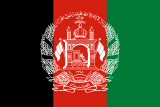
Play as · WW3 2026 · L1 · Taliban Emirate · Unrecognized
Afghanistan - 2026
Afghanistan is governed by the Islamic Emirate of Afghanistan - the Taliban government that returned to Kabul in August 2021 after the US-NATO withdrawal - and recognized as legitimate by no major power, though China, Russia, Iran, Pakistan, and the Central Asian states have all maintained working diplomatic relationships at varying levels of formality. Population about 41M, GDP around $80B PPP, an economy in collapse since the 2021 transition stripped foreign aid (which had funded about 75% of state expenditure) and froze about $7B in central-bank reserves held overseas. The strategic identity is the unrecognized state with no friends - formally isolated, operationally engaged with every regional power for separate transactional reasons, and contested internally by the Islamic State Khorasan Province insurgency that has emerged as the principal security challenge.
Starting position
The Taliban-era Afghan armed forces inherited substantial American-supplied equipment from the collapsed Afghan National Army - Black Hawk and Mi-17 helicopters, A-29 Super Tucano light attack aircraft, MD 530 helicopters, MRAPs, Humvees, M16 and M4 rifles in unknown but large quantities. Maintenance has been sharply degraded by sanctions, lack of contractor support, and parts unavailability. The force is organized around former insurgent commanders converted into divisional and corps commanders. Pakistani technical and intelligence cooperation has been intermittent - the Tehreek-i-Taliban Pakistan (TTP) cross-border attacks against Pakistani territory have soured a relationship that was historically close, and Pakistani airstrikes on Afghan territory in 2024 and 2025 have produced visible diplomatic strain. The Iranian relationship runs through the Hazara minority, water disputes on the Helmand River, and counter-narcotics cooperation. The Chinese relationship is mining, infrastructure, and the Belt and Road's Wakhan Corridor question.
What turns the campaign
What the Taliban government wants is international recognition extended at sufficient scale to unfreeze the central-bank reserves and reopen development aid, the TTP problem with Pakistan managed without giving Islamabad operational reach into Afghan territory, the Chinese mining and infrastructure investments delivered at the scale that has been promised, the Iranian water disputes resolved or contained, and the ISKP insurgency suppressed before it converts the Afghan rural-religious-conservative environment into a civil-war pattern that the Taliban itself spent twenty years exploiting. What the Taliban fears is a major Western recognition holdout that becomes structural, a Pakistani military escalation over TTP that opens a second front, an ISKP attack that produces mass casualties internationally and prompts a US strike package, and a Chinese disengagement from Afghan investment that closes the only major external economic relationship the Emirate has cultivated.
Signature challenge
The unrecognized state
Afghanistan's central strategic problem is governing a country whose sovereignty no major power formally acknowledges, with an economy that aid-dependence has hollowed and sanctions have walled off, against an insurgency that uses the same playbook the current government wrote, in a regional environment where every neighbor maintains transactional cooperation while withholding political legitimacy. NationFall surfaces this as the Afghan campaign's defining tension: a state whose foreign-policy options run through unrecognized-government workarounds, whose security situation requires the kind of state capacity that recognition and aid would be the natural enablers for, and whose path to legitimacy passes through political reforms (girls' secondary education, female workforce, ethnic and sectarian power-sharing) that the current ideological program will not concede.
Try the Afghanistan campaign
Free demo. Pick WW3. Pick Afghanistan. Govern the unrecognized.
Play Free Demo as Afghanistan