

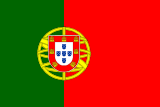
Play as · WW2 1939 · L1 · Iberian Neutral
Portugal - 1939
The Iberian neutral that both sides will spend the war competing for. Portugal in 1939 is governed by António de Oliveira Salazar's Estado Novo - corporatist, Catholic, conservative, signed the Iberian Pact with Franco's Spain in March 1939, and bound to Britain by the Anglo-Portuguese Alliance dating to 1373, the oldest continuously operative diplomatic alliance in the world. The strategic identity is calibrated neutrality: keep Spain out of the Axis, keep the British alliance functional, keep the African and Asian colonies (Angola, Mozambique, Portuguese Guinea, São Tomé, Cape Verde, Goa, Macau, Timor) intact, and trade what can be traded - especially the wolfram (tungsten) the German war machine needs.
Starting position
The Portuguese armed forces are small and underfunded - about 30,000 active in 1939, mostly conscript infantry, a coastal-defense navy with a few sloops and submarines, an air force that flies a mix of obsolete British and French types. The serious investment has been in the political-internal-security apparatus (PIDE precursors, the Portuguese Legion). Portugal has run a careful budget surplus through the 1930s and avoided debt; Salazar treats fiscal discipline as a strategic asset that makes neutrality affordable. The Atlantic islands - the Azores and Madeira - are sovereign Portuguese territory, lightly garrisoned but politically untouchable. The continental defense plan is to make any invasion expensive enough that Berlin or London prefers a friendly neutral.
What turns the campaign
What Portugal wants is Spain kept neutral (the Iberian Pact's purpose, formalized in March 1939 to lock Franco out of the Axis bloc), the British alliance maintained without the diplomatic costs of being seen as a co-belligerent, the colonies left undisturbed by both sides (Britain has the Royal Navy, Berlin has Italian colonial ambitions to channel), and the wolfram trade managed so both sides depend on the supply without either being able to monopolize it. What Portugal fears is a German pressure play that demands transit through Spain to Gibraltar (Operation Felix in the planning files), a British demand for the Azores that forces Lisbon to choose, a colonial uprising that exhausts the small Portuguese army, and any strategic situation where Salazar's careful balancing requires actual commitment.
Signature challenge
The wolfram-and-Azores hinge
Portugal's central strategic problem is that two of its assets - the Azores as a mid-Atlantic transit point, and wolfram (tungsten ore, essential to high-grade armor-piercing shells) as a critical war material - are valuable precisely to the degree that the war makes them so. Selling wolfram to both sides keeps the trade alive; selling to one side forces a choice. Granting Azores basing rights to Britain or the United States compromises the neutrality that keeps Spain out. NationFall surfaces this as the Portuguese campaign's defining tension: the longer the war runs, the higher the bid for both, the more difficult Salazar's tightrope becomes - and the more catastrophic the consequence of stepping off it on the wrong side.
Try the Portugal campaign
Free demo. Pick WW2 1939. Pick Portugal. The neutral whose ports both sides need.
Play Free Demo as PortugalRegional: United Kingdom · France