

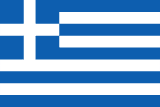
Play as · WW2 1939 · L2 · Allies
Greece - 1939
Greece in 1939 is governed by Ioannis Metaxas, dictator since the August 1936 coup, leading a small kingdom (population about 7 million) under King George II. The strategic posture is officially neutral but pro-British in private alignment, with the Royal Navy maintaining substantial Mediterranean influence and Greek shipping representing significant Allied logistics potential. The military is mid-tier - capable mountain infantry, modest naval forces, an air force outclassed by Italian and especially German equipment. The economy is agricultural, with tobacco and shipping as the principal exports.
Starting position
On October 28, 1940, Mussolini's Italy invades Greece from Albania expecting a quick victory; Metaxas's 'Όχι' refusal becomes the foundational national-day moment. The Greek army not only holds but counterattacks, pushing Italian forces back into Albania and producing the first land victory of any Allied force against an Axis power. The reverse arrives in April 1941 when Germany invades to rescue the Italian position - Greek resistance lasts three weeks, the British expeditionary force evacuates from Crete (which falls to airborne assault in May), and the country is partitioned into German, Italian, and Bulgarian occupation zones. The famine of winter 1941-42 kills hundreds of thousands. ELAS (communist-led) and EDES (republican) resistance organizations operate from the mountains. The British-Soviet October 1944 percentages agreement places Greece in the British sphere; the December 1944 fighting in Athens between British forces and ELAS opens the civil war that runs through 1949.
What turns the campaign
What Greece wants is the neutrality respected (the same that worked for some neighbors, doesn't for Greece), the Italian invasion repulsed (achieved, decisively), the British alliance delivering reinforcement at scale (the 1941 expeditionary force is too small to hold against German weight), the resistance organizations contributing to liberation without producing the post-war factional conflict (they do produce it), and the post-war territorial settlement preserving sovereignty without Yugoslav-Bulgarian-Soviet pressure on Macedonia (it does, narrowly). What Greece fears is the Germano-Italian-Bulgarian occupation persisting indefinitely, the famine repeating in subsequent winters, the resistance fragmenting into the civil-war pattern that arrives in late 1944, and the Cold War emerging with Greece on the wrong side of the Truman Doctrine line (which it isn't - Truman makes Greece the founding case).
Signature challenge
The repulse-then-collapse problem
Greece in 1940-41 produces the largest Italian land defeat of the early war and is then crushed by German entry within weeks. The same army that pushed Mussolini back into Albania could not stand against the Wehrmacht. NationFall surfaces this as the chronic small-state problem: a successful campaign against one peer adversary opens the strategic-value question that brings a stronger adversary into the theater, and the second campaign cancels the first. The 1941-44 occupation and 1944-49 civil war are the long-form consequences of this two-stage collapse.
Try the Greece campaign
Free demo. Pick WW2. Pick Greece. Repulse Italy, fight Germany, navigate liberation.
Play Free Demo as GreeceRegional: Yugoslavia · Italy · UK · Bulgaria