

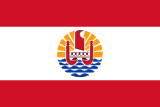
Play as · WW2 1939 · L1 · French Pacific Territory · Bora Bora US Base
French Polynesia - 1939
French Polynesia in 1939 is the French Pacific overseas territory - under French administration since the 1842 establishment of the protectorate over Tahiti and the broader 1880 annexation of the Society Islands and the subsequent expansion through the broader French Polynesian archipelagos. Population about 50,000 (substantially Polynesian indigenous-population alongside the small French administrative-and-trading community). The strategic identity is the French Pacific overseas territory with the looming September 1940 Free French rallying that will parallel the New Caledonia switch (the political-administrative reset that brought the territory into the broader Allied war-effort), the substantial US wartime base at Bora Bora (Operation Bobcat, the substantial US Navy-and-Marine-Corps base development from January 1942 that became the first major US Pacific-base-development of the wartime period), the broader Pacific transit-and-supply-line strategic positioning, and the post-1945 substantial restructuring of the colonial-political-institutional framework.
Starting position
French Polynesia's defense-architecture in 1939 is minimal - the small French colonial garrison and the broader French Empire-administrative architecture. Equipment is light. The substantial post-September-1940 Free French period will produce the substantial Allied-cooperation framework - the Bataillon du Pacifique (the Free French volunteer unit raised in the Pacific French colonies that will fight in the Western Desert and Italian campaigns), the substantial US-French cooperation including the broader Operation Bobcat US base development at Bora Bora from 1942, and the broader Pacific transit-and-supply-line strategic-significance. The Bora Bora base - the substantial US Navy fueling-and-shipping facility, the substantial US Marine Corps and US Army garrison, the substantial post-1942 supply-line operations to Australia and the broader South Pacific theater - will be the principal wartime strategic-development for the territory.
What turns the campaign
What French Polynesia in 1939 wants is the French colonial-administrative framework preserved through the looming wartime period, the looming Free French rallying institutionalized through the political-administrative framework the post-1940 period will produce, the substantial post-1942 Operation Bobcat US base development at Bora Bora preserved at the operational scale that the broader Pacific Allied operations will demand, and the broader Pacific transit-and-supply-line strategic-significance preserved through the multi-year wartime period. What French Polynesia fears is exactly the historical sequence - the June 1940 fall of France creates the immediate Vichy-aligned political-administrative pressure, the September 1940 Free French rallying produces the political-administrative reset, the substantial post-1942 US-base-development at Bora Bora requires substantial-political-administrative coordination, and the broader Polynesian indigenous-population political-cultural framework will be substantially-affected by the substantial wartime-environment expansion.
Signature challenge
The Pacific French Free pioneer
French Polynesia's central strategic problem in 1939 is sustaining the French colonial-administrative framework through the looming wartime period that will substantially restructure the political-institutional architecture (the September 1940 Free French rallying, the post-1942 Operation Bobcat US-base-development at Bora Bora, the substantial wartime supply-line operations). The Free French rallying will be the principal early-wartime political-institutional achievement; the substantial Bora Bora US-base development will be the principal wartime strategic-infrastructure investment; the post-1945 colonial-political reform will require substantial restructuring of the post-WW2 political-institutional framework. NationFall surfaces this as the French Polynesian campaign's defining tension: the French Pacific overseas territory whose looming wartime period will produce the substantial Free French rallying and US-base-development that will substantially restructure the strategic-political situation across the entire wartime period.
Try the French Polynesia campaign
Free demo. Pick WW2 1939. Pick French Polynesia. The Pacific French Free pioneer.
Play Free Demo as French Polynesia