

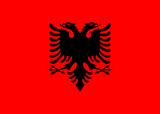
Play as · WW2 1939 · L1 · Italian Protectorate
Albania - 1939
Albania's 1939 begins under King Zog and ends under Italian rule. The Italian invasion of 7 April 1939 - Good Friday - overran the small Albanian army in five days, sent Zog into exile in Greece and then London, and converted Albania into a personal union under Vittorio Emanuele III as King of Albania, administered as an Italian protectorate. Population about 1.1M. The strategic identity in 1939 is the small client-state-becoming-occupied-state, with the immediate prospect of being the launching pad for Italian operations against Greece (October 1940) and Yugoslavia (April 1941). Game starting positions can take the pre-invasion or post-invasion configuration; both are L1 challenges of survival under disproportionate pressure.
Starting position
The Royal Albanian Army of early 1939 was about 13,000 men in skeletal divisions, equipped with a mix of Italian, Czech, and pre-war locally produced weapons. The 1925 and 1927 Treaties of Tirana had progressively converted Albania into an Italian client - Italian advisors throughout the army, Italian capital dominating the Albanian economy through SVEA and AIPA, Italian engineers building the road network that would carry the invasion. The April 1939 invasion was less a war than the kicking-in of a door already loose on its hinges. Post-invasion, the Italian Tenth Army holds the country with about 22,000 troops, with the Albanian collaborationist administration under Shefqet Vërlaci handling civil affairs.
What turns the campaign
What Albania wants - across both the pre-invasion and protectorate periods - is sovereignty preserved or restored, the Italian relationship rebalanced from client to partner (impossible by 1939), the Kosovo question handled in a way that does not invite Yugoslav military pressure, and the Greek border managed against the Northern Epirus claims that Greek nationalist circles have not abandoned. Within the protectorate, the question becomes whether the collaborationist administration can extract autonomy through compliance, or whether resistance - initially small, growing through 1942-43, eventually consolidated under Enver Hoxha's communist partisans - produces a different post-war settlement. What Albania fears in 1939 specifically is the Italian invasion that becomes inevitable through 1938 and arrives in April; post-invasion, it is the looming use of Albanian territory as the staging ground for an Italian Greek campaign that brings retaliatory war to Albanian soil.
Signature challenge
Sovereignty in five days
Albania's central strategic problem in 1939 is that its sovereignty rests on a single relationship (with Italy) that has been progressively converted from alliance to dependency to occupation across the preceding decade, and the moment of conversion happens in April. The army is too small to resist; the diplomatic architecture (League of Nations protests, British and French statements) produces no material support; the collaborationist option preserves administrative continuity at the cost of independence; the resistance option means civil war alongside the world war. NationFall surfaces this as the Albanian campaign's defining tension: a small state whose entire foreign-policy history through the 1930s was supposed to keep Italy friendly enough not to invade, faced in April 1939 with the invasion happening anyway and the question of what survives the loss of sovereignty.
Try the Albania campaign
Free demo. Pick WW2 1939. Pick Albania. Five days, then forty-five years of foreign rule.
Play Free Demo as Albania